

Overview
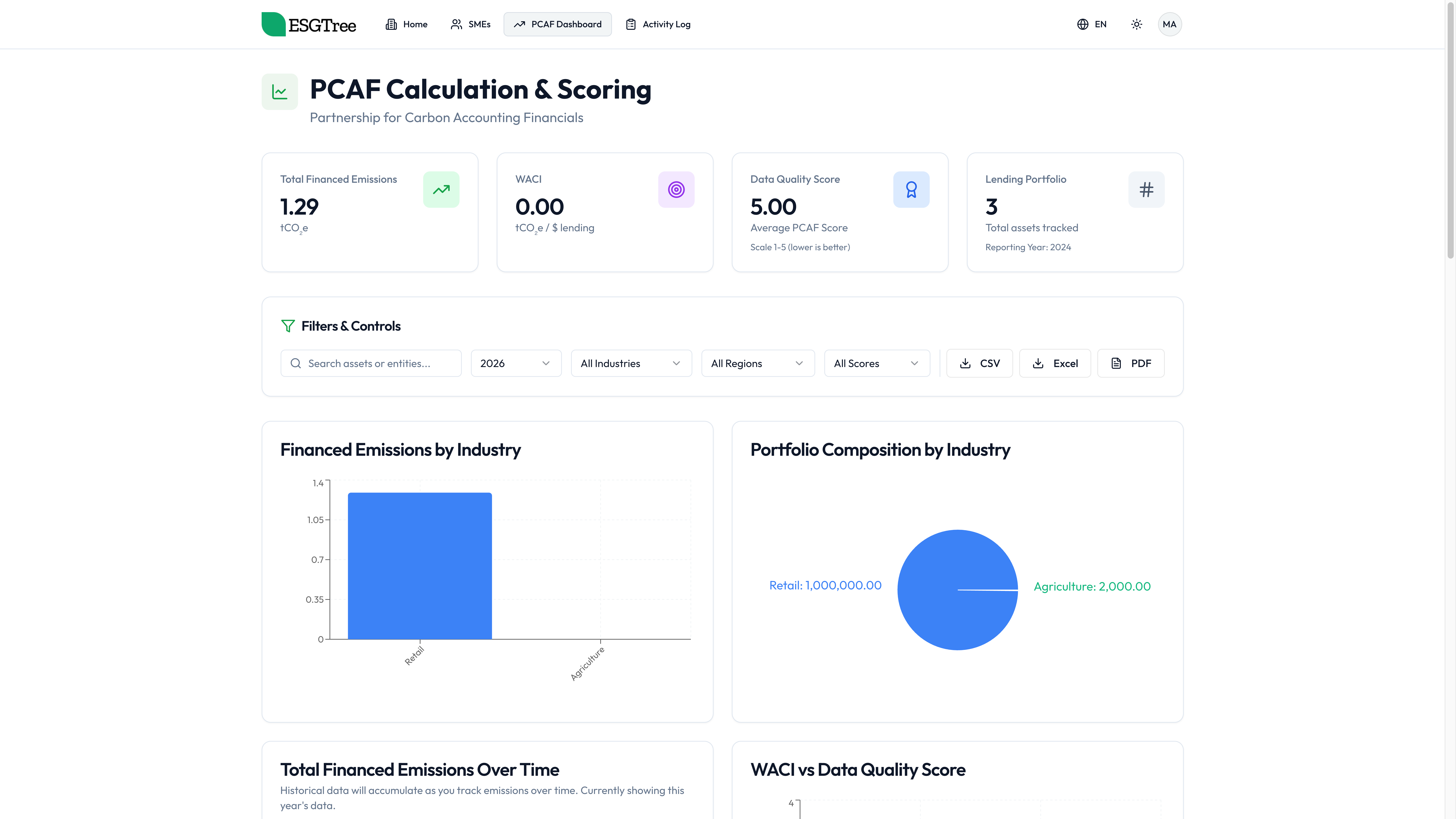
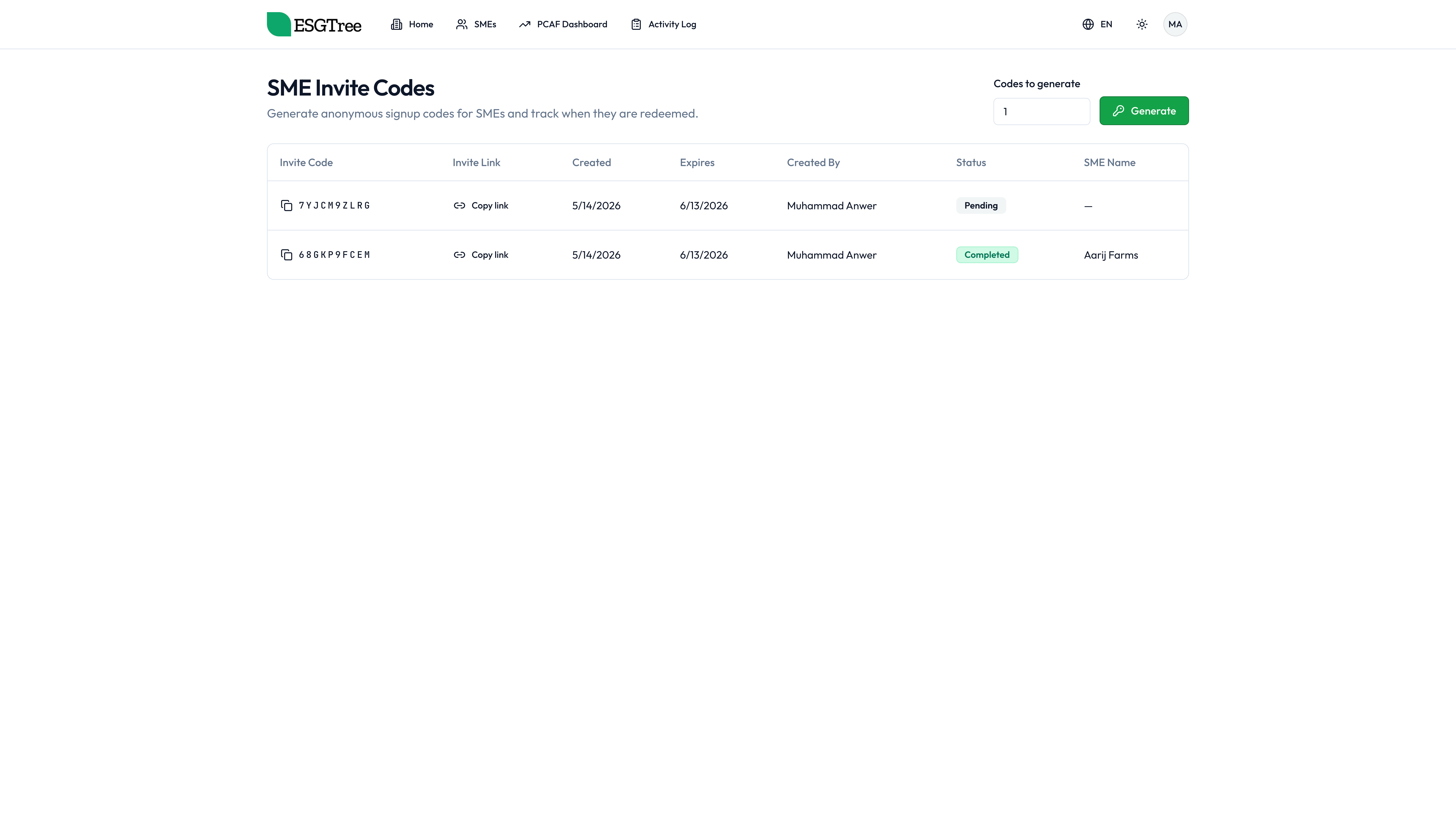
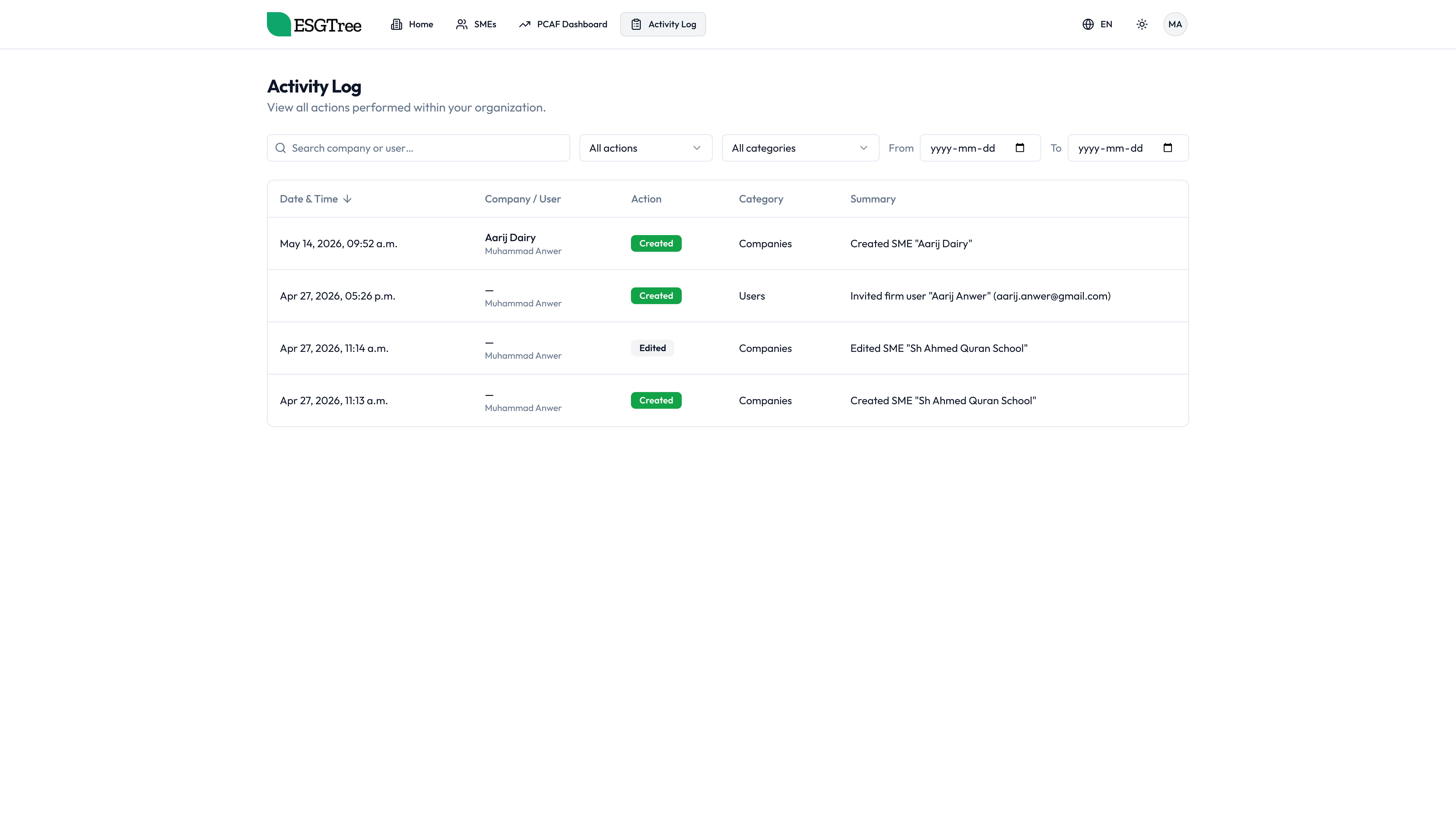
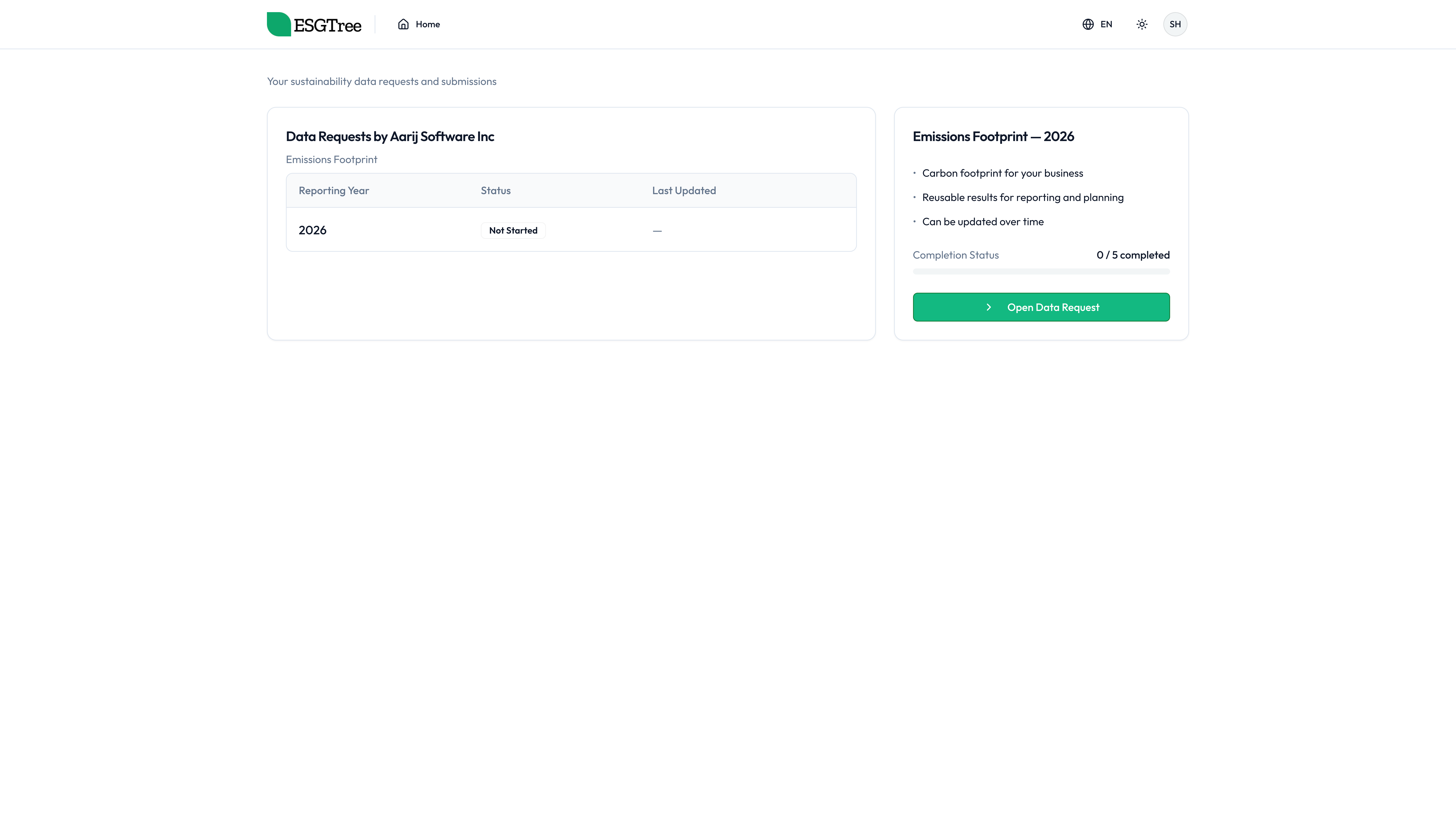
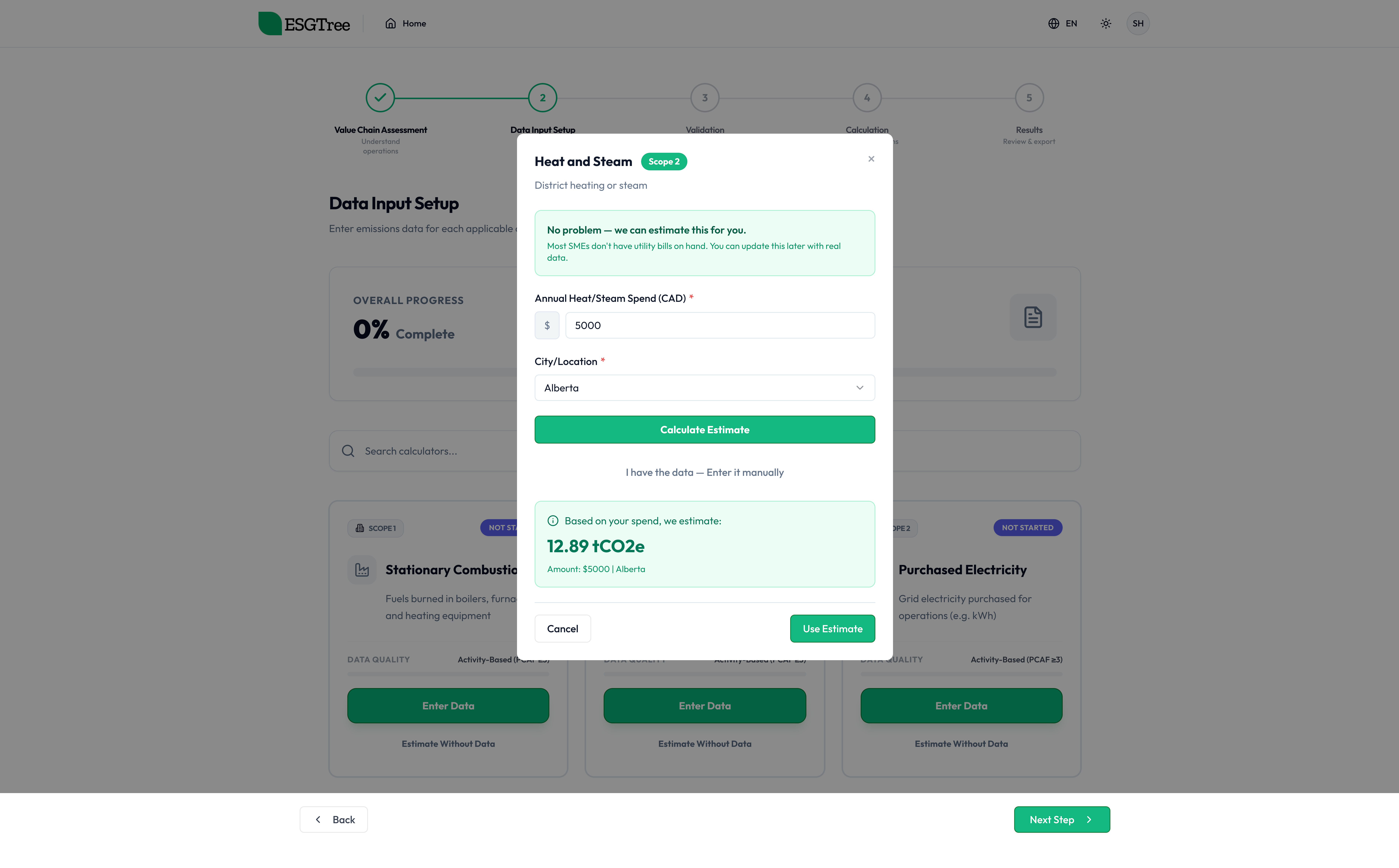
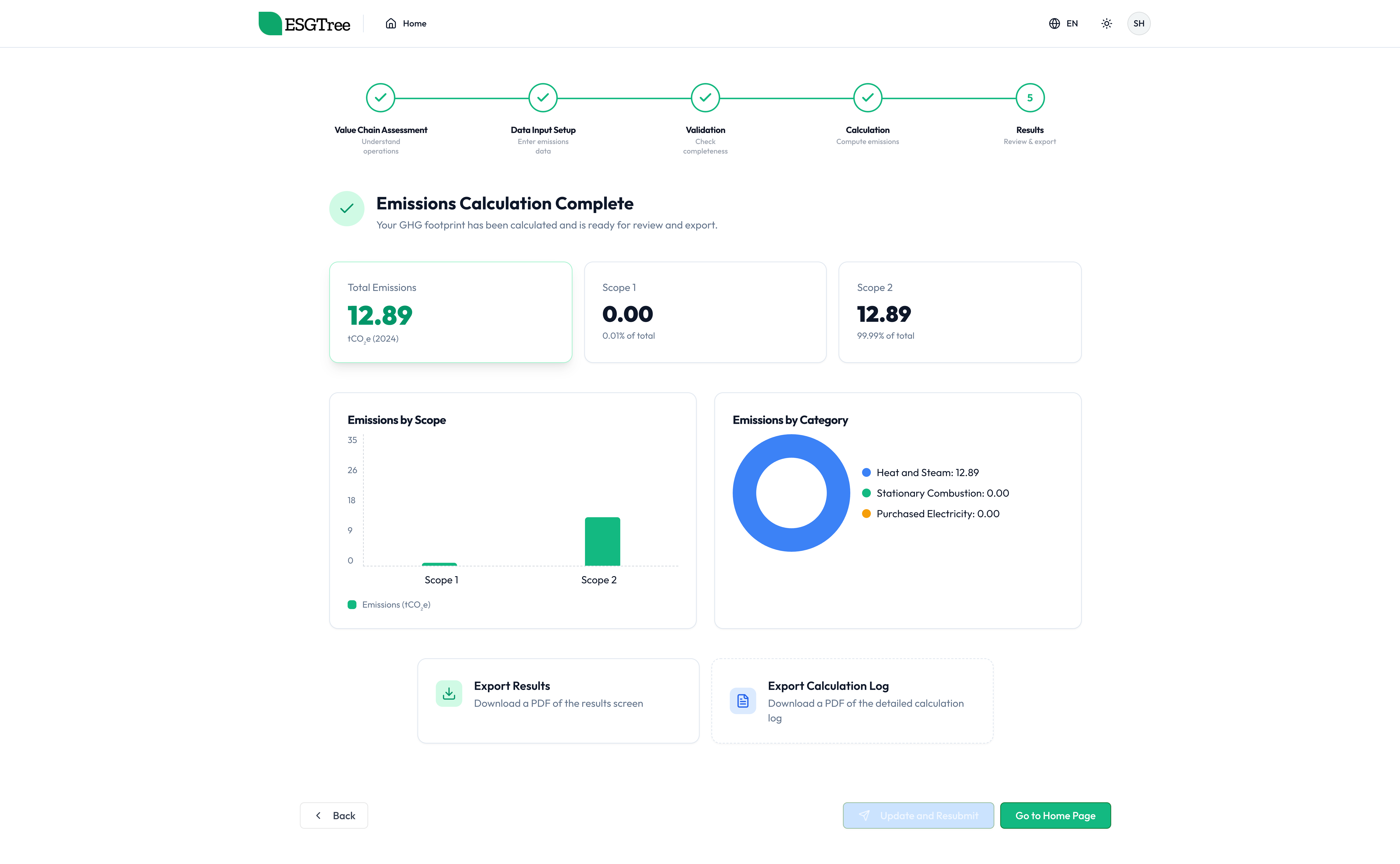
ESGTree is a multi-tenant SaaS platform that helps financial firms onboard SME portfolio companies, collect emissions data, and generate PCAF-aligned financed emissions reports. It serves two distinct personas through separate interfaces: a data-dense firm dashboard for analysts and a guided step-by-step wizard for SME users entering their own emissions data.
I led full AI-driven development of a full-stack MVP from prototype to production in under 4 weeks, guiding a team of 2 engineers and owning architecture and delivery. I made deliberate tradeoffs to prioritize speed and validation. The product won a competitive vendor demo with Desjardins, securing a paid pilot with onboarding in progress.
After validating product-market fit, I led a backend refactor to NestJS to introduce modular architecture, enforce clear boundaries, and improve reliability and data integrity. This included migrating to Drizzle ORM, adding session-based dual authentication (Replit OIDC and email/password), establishing a database-driven emissions activity model, and building a 400+ test suite covering unit, integration, and E2E flows — transitioning the system from a rapid prototype to a production-grade platform.
What I built
AI-Driven 0→1 MVP Delivery
Led full AI-driven development of a full-stack MVP from prototype to production in under 4 weeks, making deliberate tradeoffs to prioritize speed and validation. Won a competitive vendor demo with Desjardins, securing a paid pilot.
PCAF-Aligned Emissions Engine
Built a calculation engine for Scope 1, 2, and 3 financed emissions using the PCAF standard: Attribution Factor, Gross Emissions, and Data Quality Scoring. Supports spend-based proxy estimation for all 5 activity types when direct data is unavailable.
AI-Powered Document Parsing
SMEs can upload CSV, Excel, or PDF files to auto-populate emissions forms. A multi-stage pipeline extracts data via header matching or OpenAI, then applies post-AI validation with human-in-the-loop verification before acceptance.
Dual-Interface Product Design
Designed two tailored interfaces from a single backend: a data-dense firm dashboard for portfolio analysts and a guided step-by-step wizard for SME data entry — each optimized for its persona's workflow and context.
Modular Backend Architecture
Led a backend refactor to NestJS to introduce modular architecture, enforce clear tenant boundaries, and improve reliability and data integrity. Established a database-driven activity model so emissions categories can be updated without code changes.
Multi-Country & Bilingual Support
Supports 13 countries and bilingual (French/English) data entry. Emissions factors and sector data are seeded from Excel workbooks via a hash-gated system — changes to source data propagate automatically on deploy without code changes.
End-to-End System Ownership
Designed the multi-tenant data model, session-based dual auth (Replit OIDC + email/password), invitation flows, bulk import pipeline, and a 400+ test suite across 15 files covering unit, integration, and E2E scenarios.
Results
- Led full AI-driven development of a full-stack MVP from prototype to production in under 4 weeks.
- Won a competitive vendor demo with Desjardins, securing a paid pilot with onboarding in progress.
- Transitioned the system from a rapid prototype to a production-grade platform by leading a NestJS backend refactor.
- 400+ tests across 15 test files covering unit, integration, and E2E flows.
- 5 emissions activity types across Scope 1, 2, and 3 with PCAF-aligned attribution calculations.
- 13 countries supported via a hash-gated, Excel-driven seed system — zero code changes required to update emissions factors.